CN
CN English
 français
 русский
 español
 português
 ไทย
ไทย Indonesia
 Tiếng việt
 العربية
 فارسی
فارسی

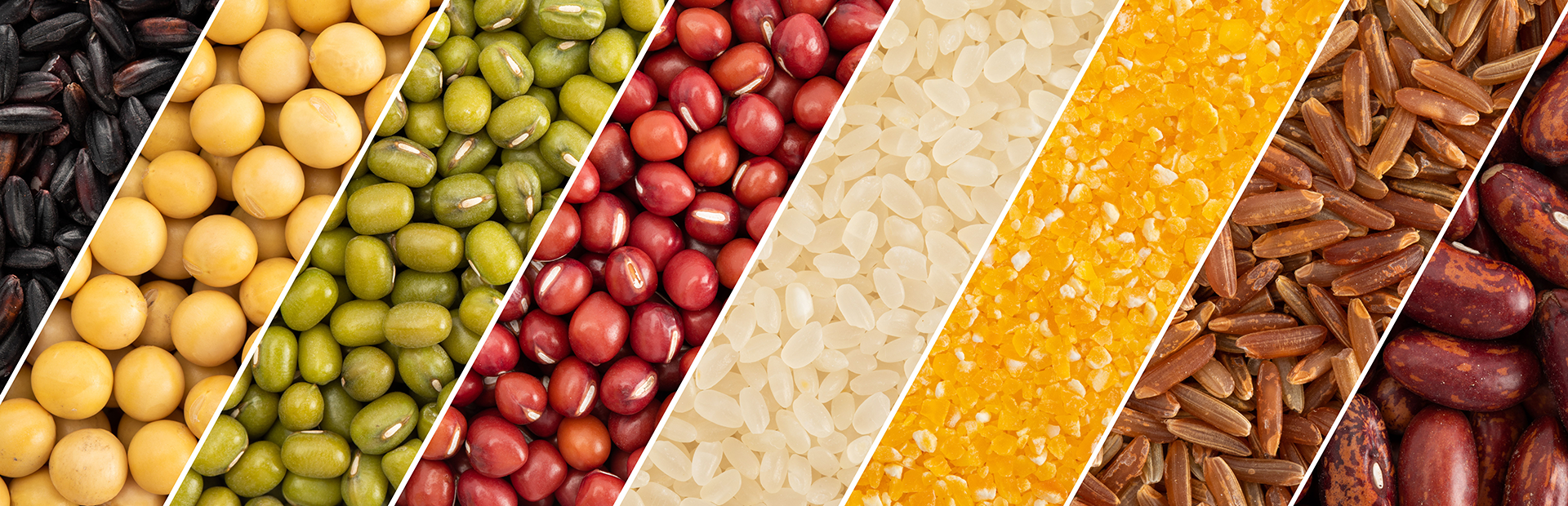
In today’s global food supply chain, a single defective product can damage brand reputation, trigger costly recalls, or cause rejection of an entire shipping container. For processors of rice, nuts, seeds, grains, and even recycled materials, achieving near‑perfect purity is no longer a luxury—it’s a baseline requirement.
Enter the optical color sorter: a high‑speed, AI‑powered machine that sees what the human eye cannot. By combining advanced cameras, precision lighting, and intelligent ejection systems, modern color sorters remove defects, foreign material, and off‑color products at rates of several tons per hour. This article dives deep into how color sorting technology works, where it delivers the highest ROI, and what the next generation of sorting brings to your processing line.
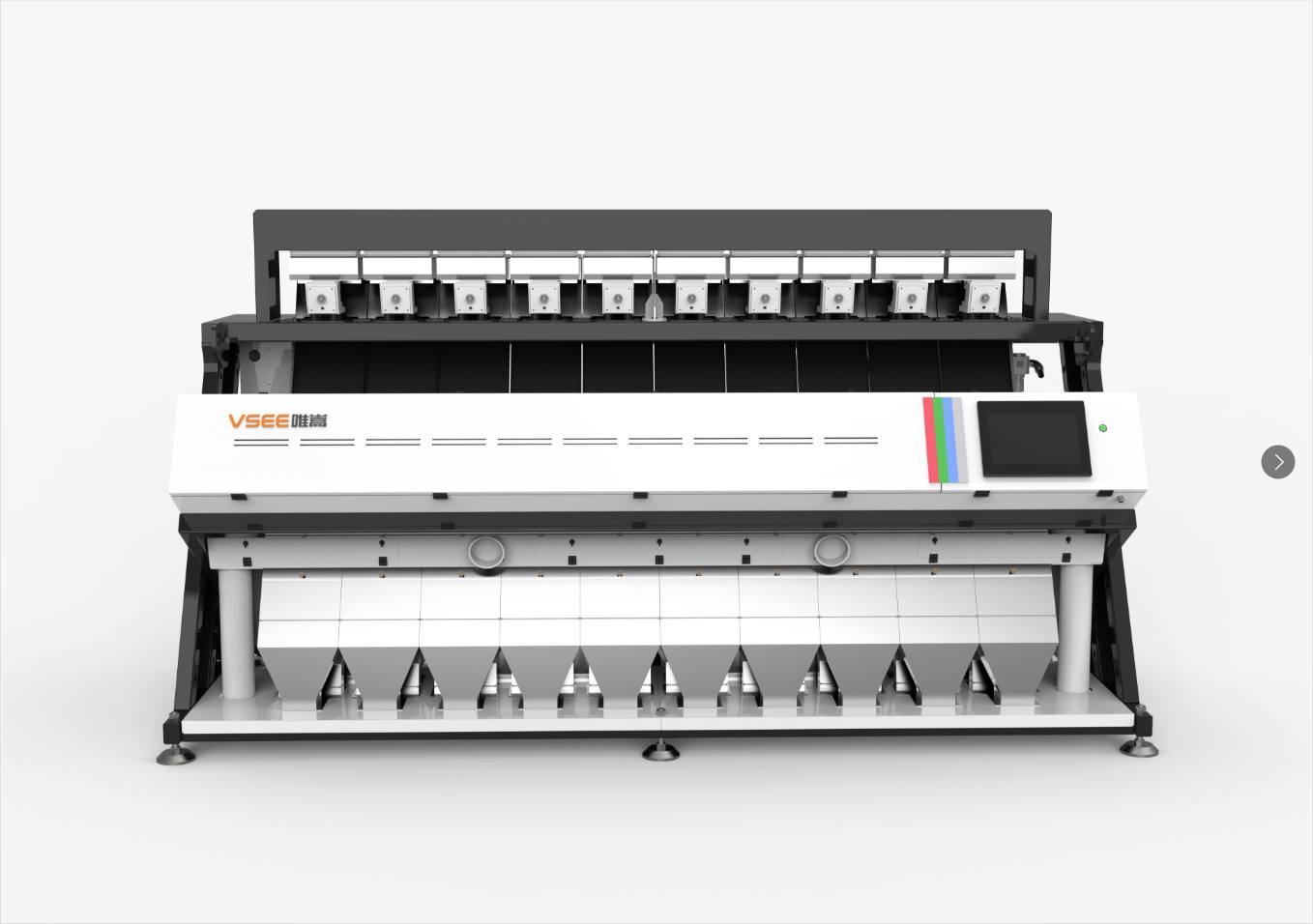
At its simplest, a color sorter is an automated inspection device that uses optical sensors (CCD cameras, CMOS sensors, or hyperspectral cameras) to scan individual objects flowing through a chute or on a belt. When the system detects an item that does not meet preset quality parameters—based on color, shape, size, or even biological characteristics—it activates a precise jet of compressed air to deflect that item from the product stream.
The result? A clean, uniform output with defect rates as low as 0.1% or better.
Feeding system (vibratory feeder or belt) – spreads material into a single‑layer stream
Optics chamber – high‑resolution cameras + adjustable LED lighting (RGB, NIR, UV, or hyperspectral)
Image processor – proprietary software, often enhanced with deep learning AI
Ejection system – arrays of high‑speed air nozzles (typically 0.6–2.0 mm diameter)
User interface – touchscreen for recipe management, calibration, and real‑time statistics
Traditional color sorters worked on basic color thresholds: accept or reject based on pre‑defined RGB values. That approach fails with subtle defects or variable product appearances (e.g., natural variations in nuts or dried fruits).
Today’s AI‑powered color sorters use deep learning models trained on thousands of images. They can:
Distinguish between good and slightly discolored kernels with 99.9% accuracy
Detect cracks, insect damage, mold, or internal blemishes invisible under visible light
Recognize foreign material like glass, stones, plastic, or even different crop varieties
Automatically adapt to new products without manual parameter tuning
A leading example is the use of deep learning for rice sorting—where chalky grains, yellow kernels, and red rice must be removed at high speed. Top‑tier sorters now achieve a false‑reject rate of less than 1% while processing 5–15 tons per hour per machine.
Optical sorters are not just for rice. They are the standard solution wherever purity and uniformity drive value.
Rice – remove chalky, broken, yellow, or red grains, plus paddy and stones
Wheat & Maize – screen for mycotoxin‑infected kernels, discoloration, and foreign seeds
Quinoa, millet, sorghum – upgrade nutritional quality by eliminating immature seeds
Almonds, cashews, peanuts, walnuts – remove shells, insect damage, and mold
Sunflower seeds, pumpkin seeds – color sort for size uniformity and defect removal
Beans, lentils, chickpeas – eliminate splits, cracked seed coats, and soil clods
Plastic flakes, PET chips – separate by color and polymer type
Coffee beans – remove quakers (unripe beans) and foreign objects
Dried fruit – sort apricots, raisins, and cranberries by degree of browning
Subscribe & Get More Information
Please read on, stay posted, subscribe, and we welcome you to tell us what you think.

Call Us: +8613655554449


Copyright © 2026 Anhui Vsee Optoelectronic Technology Co., Ltd. All Rights Reserved.
Sitemap
| Blog
| Xml
| Privacy Policy
 Network Supported